20 Bandana Crochet Patterns for Free Download PDF
Find 20 working free PDF downloads for hair bandanas, neck kerchiefs, and a few pet sizes.
If you are looking for a free crochet bandana pattern PDF, start here with 20 direct files from yarn companies and designers. Some tie at the back of the head, some wrap at the neck, and a few are sized for a pet. Each card gives you enough information to choose a shape before downloading.
A compact hair scarf needs coverage across the head, while a neckerchief needs extra width or length for the knot. A granny triangle is an especially forgiving first choice, and open filet work is worth a look if you want room for a clear motif.

Key takeaways
- Each PDF button opens a no-cost publisher file. Some pattern pages also sell optional yarn kits.
- Check whether the measurements include the ties. A wide triangle and a shallow neck scarf serve different purposes.
- Choose smooth cotton for a crisp summer edge or a soft blend for drape.
- Measure one motif before making a full band of granny squares. Small differences add up at the joins.
Before you start
Check the diagram and terms PDFs may use different abbreviations or count the turning chain differently. Read the key before marking your size.
Measure for the intended fit Measure where the bandana sits, then compare both the straight edge and the tie length. If you plan to knot it at the neck, leave enough length for the knot without crowding the throat.
Swatch the fabric Check repeat width and stretch. Cotton can relax with wear, so let a washed swatch dry before judging how the ties or edge will behave.
Download format The direct links open the publisher’s file. The pattern page gives you the sample photos, yarn options, and revisions.
Which bandana shape or stitch suits you?
Compare finished examples and stitch close-ups before choosing a PDF. Stock photos show a related texture or drape. Pattern videos show the named design.
| Close-up | What to look for |
|---|---|
 |
Granny-style hair coverage
Tamara Kelly’s sample shows the open groups and the depth of the Caron Hair Bandana. Look at the dimensions excluding the ties when comparing these PDF options. Pattern video · Watch on YouTube · Michaels Stores Caron Crochet Hair Bandana · Caron Cutie Kerchief · Granny Bandana |
 |
Solid crochet texture
Dense fabric hides the gaps between stitch columns. Compare the written repeats for half double crochet and moss stitch before judging your own swatch. Stock technique reference · Photo · Pexels Lion Brand Half Double Crochet Bandana · Moss Stitch Neckerchief |
 |
Contrasting stripes in real yarn
The photo illustrates how wide color bands read from a distance. Choose close shades for a softer effect or keep one strong contrast near the point. Stock texture reference · Photo · Pexels Venice Beach Bandana · Havana Bandana · Caron Side-to-Side Kerchief Scarf · Opposites Attract Kerchief |
 |
Filet and openwork
The Crochet Crowd’s Fantastic Filet sample shows how the open cells affect transparency and drape. The other linked patterns use their own shell or lace repeats. Pattern video · Watch on YouTube · The Crochet Crowd Fantastic Filet Bandanna · Yellow Crochet Bandana Headband · Lace Bandana Headband · Shell Kerchief Scarf |
 |
Motifs and color planning
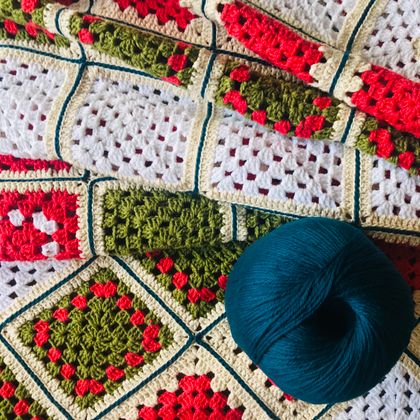
The stock close-up shows how repeated crochet units can share a background color. Block a full motif before joining the Duo Granny design. Stock technique reference · Photo · Pexels |
 |
Longer ends and wrap depth
This fabric example shows the bulk a thicker yarn can add to folded ends. Read the finished length in each PDF if you want more room for a knot. Stock drape reference · Photo · Pexels Tiny Triangle Scarf · Caron Side-to-Side Kerchief Scarf · Opposites Attract Kerchief |
 |
A closed bandana cowl
The front triangle hangs below the neck opening. This is Tamara Kelly’s City Chic design, which you wear by pulling it over the head. Pattern video · Watch on YouTube · Tamara Kelly – Moogly |
 |
Pet bandana proportions
A shallow triangle leaves less fabric hanging at the front. This is a separate fit example. Use the PDF measurements for the accessory you make. Related pet-bandana video · Watch on YouTube · Yarn Stash with Crystal | Marching North Star Spangled Bandana · You & Pup Matching Kerchiefs · Peppermint Pet Neckerchief |
Classic triangles and everyday hair scarves
01Caron Crochet Hair Bandana
Soft color changes run through the granny-style groups. The width gives you more coverage than a small kerchief, while the PDF includes a stitch diagram for the increases.

Maker’s tip Mark the turn and the central space on your first rows. Check the sample’s tie length before cutting or joining the yarn.
02Lion Brand Half Double Crochet Bandana
A solid half double crochet fabric lets one color or a dyed skein do the work. It suits a plain kerchief where you want stitch texture without open holes.
Maker’s tip The dye kit in the source is one way to get the look. If you have finished cotton yarn, choose one that matches the pattern gauge.
03Venice Beach Bandana
Wide stripes turn a compact headscarf into a good low-yardage color project. The work grows outward from the middle of the long edge.
Maker’s tip Stack the contrast shades in viewing order before starting. Check the center increases on both sides so the top edge stays balanced.
04Caron Cutie Kerchief
One PDF gives you a small and a larger version. The repeating three-stitch groups leave enough open space to show the changes of shade.
Maker’s tip Highlight your size throughout the PDF, including the yardage. The yarn quoted for the small version is much less than the adult amount.
05Yellow Crochet Bandana Headband
A few stitch heights create an appealing little shell texture. It makes a good option if you want the shape and ties of a bandana with more detail than rows of one stitch.
Maker’s tip Use a smooth yarn so you can see the anchor between shells. Compare your repeat with the pattern before changing the width.
06Havana Bandana
Short, separated bands of color make this a practical scrap project. The scalloped groups also show up well if you keep two shades close in value and let a third stand out.
Maker’s tip Swatch four shells using the stated gauge. Plan which colors can be carried up the side and which are easier to cut and weave in.
Granny motifs, shells, and lace
07Granny Bandana
This is a generous granny triangle. Separate groups give it drape, and the shape grows from the lower point one group at a time.
Maker’s tip Use the finished size to decide whether you want this much coverage. Check the repeat gauge so the depth grows at the rate you expect.
08Duo Granny Bandana
Square and partial motifs make a colorful kerchief with a distinct assembly stage. It works especially well when one of the colors ties several motifs together.
Maker’s tip Make a full square first and compare it with the 4 in target. Lay out the pieces before joining and decide where the chosen edging color will sit.
09Fantastic Filet Bandanna
Open and filled cells give this bandanna an airy pattern. A light, smooth yarn makes the structure easier to read while you move between cells.

Maker’s tip Keep the chart beside your work. Mark each completed row and count cells before starting the next one.
10Appliqué Kerchief and Scarf
A shell background gives you a place to arrange the appliqué details. The alternate scarf uses the same palette in a longer piece.
Maker’s tip Check the kerchief dimensions before adding the motifs. Pin their positions to make sure the design reads when it curves around the head.
11Lace Bandana Headband
Alternating stitches and chain spaces give this bandana a light edge, even in a medium-weight yarn. It is a straightforward way to try a lace rhythm on a small shape.
Maker’s tip Keep the chain spaces easy to see, and let the lace relax flat before measuring. Pull the ties gently when checking the fit.
12Shell Kerchief Scarf
A chunky, shawl-like kerchief gives you more warmth than a cotton headscarf. The shell-like clusters spread quickly with the larger hook.
Maker’s tip Use the stated gauge to preserve the drape. A heavy yarn with less stretch may make the finished corner harder to tie.
Neckerchiefs and bandana cowls
13Tiny Triangle Scarf
This shallow triangle suits a small neck knot and needs less fabric than a deep bandana. It makes a practical choice if you want narrow tapered ends.
Maker’s tip Compare the center depth before starting the decreases. Use the row count from the first taper to guide the second side.
14Moss Stitch Neckerchief
A narrow moss stitch piece keeps the emphasis on texture and fit. It is a compact choice when you want a close neckerchief instead of a full triangle.
Maker’s tip Measure the finished span before expecting it to knot like a wider scarf. Place the hook into the correct chain spaces as the piece tapers.
15Caron Side-to-Side Kerchief Scarf
Worked from one end to the other, this pattern gives a color-changing cake room to form broad bands. The long ends offer more tying room than a small bandana.
Maker’s tip Mark where you move from increases to decreases. Match the curvature of the second half with the first section as you go.
16Opposites Attract Kerchief
The two shades make a graphic version of bandana-style neckwear. It is a long kerchief, so choose it for a wrapped or tied scarf silhouette.
Maker’s tip Use the same yarn for both tones so their fabric feels alike. Check the direction of the pattern before placing the second color.
17City Chic Bandana Cowl
A cowl gives you the front point of a bandana with a closed neck opening. The striped clusters make it an easy one to customize in two closely related shades.
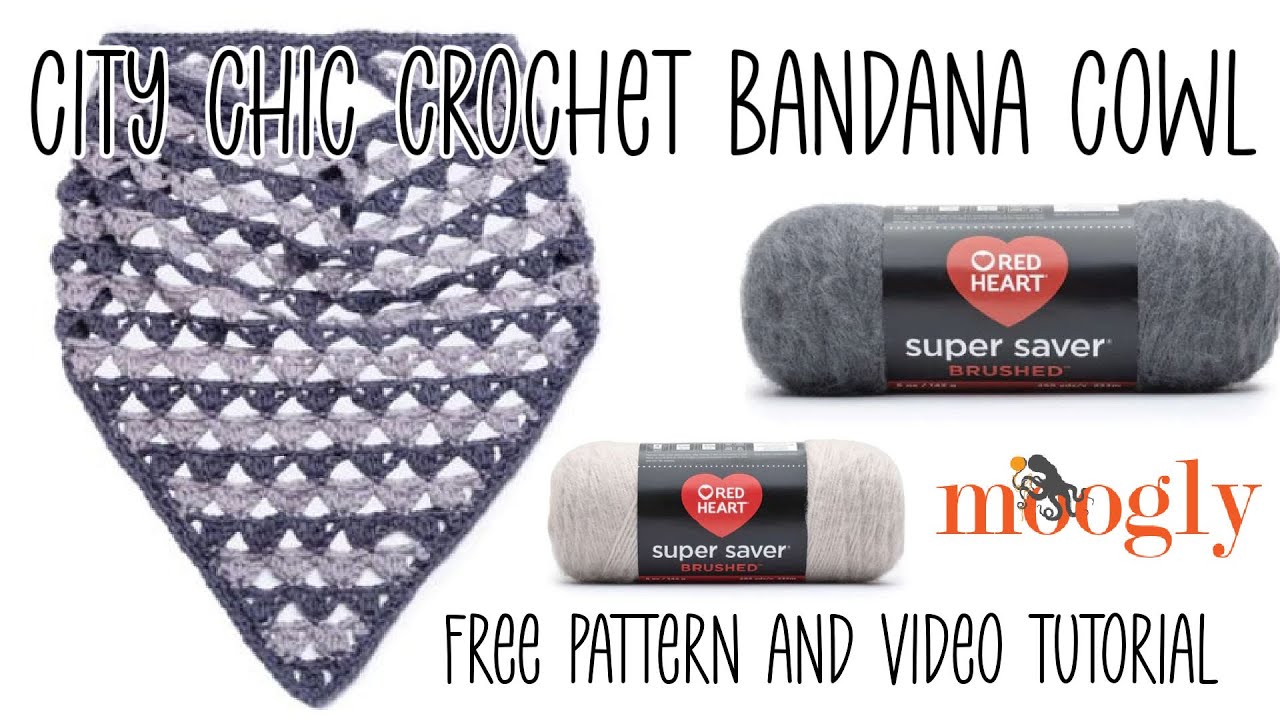
Maker’s tip Check that the opening fits comfortably over your head. Carry the unused shade loosely so the side stays flexible.
Pet kerchiefs and matching sets
18Star Spangled Bandana
The small sizes suit a pet accessory, while the largest makes a coordinated kerchief. Its graphic color blocking is especially legible in strongly contrasting shades.
Maker’s tip Use the measured width as the starting point. Keep the wrong side tidy and check the joins while the accessory is lying flat.
19You & Pup Matching Kerchiefs
The three options make this a good plan for a matching set. A self-striping yarn can create a coordinated look without adding color changes to the construction.
Maker’s tip Measure the pet before choosing either animal size. Use the same color sequence for the human and dog projects if matching stripes is important.
20Peppermint Pet Neckerchief
A peppermint palette makes a small seasonal kerchief. This project is most useful when you know the pet’s current neck measurement and can choose the designed size.
Maker’s tip Check the neck opening before fastening off. Keep yarn tails secure and use the finished piece as a supervised accessory.
Frequently asked questions
Are these crochet bandana PDF downloads free?
Yes. Each Download free PDF button links to a verified publisher or designer file. A kit, optional yarn, or other paid product can appear separately on the pattern page.
Why does the PDF open in my browser?
Many browsers open PDF files in a built-in viewer. Use its download button to save a copy, or print directly from the viewer.
What does a bandana pattern mean by width excluding ties?
It means the length across the widest fabric edge before the tie extensions. Check both dimensions because two designs with the same total span may cover different amounts of hair.
Can I switch from cotton to acrylic?
You can often substitute a similar yarn weight after you match gauge. Compare stretch and drape as well, especially on shaped ties and openwork.
Which project is usually easiest for a beginner?
Try a triangle built from repeating granny groups or a simple solid scarf. Mark the center and edges so the shaping stays even.
Final thoughts
Pick the silhouette first, then choose a stitch you can see clearly in your yarn. Download one design and mark its main repeat and finishing steps before you start. A few minutes comparing gauge and tie length can save a lot of undoing later.