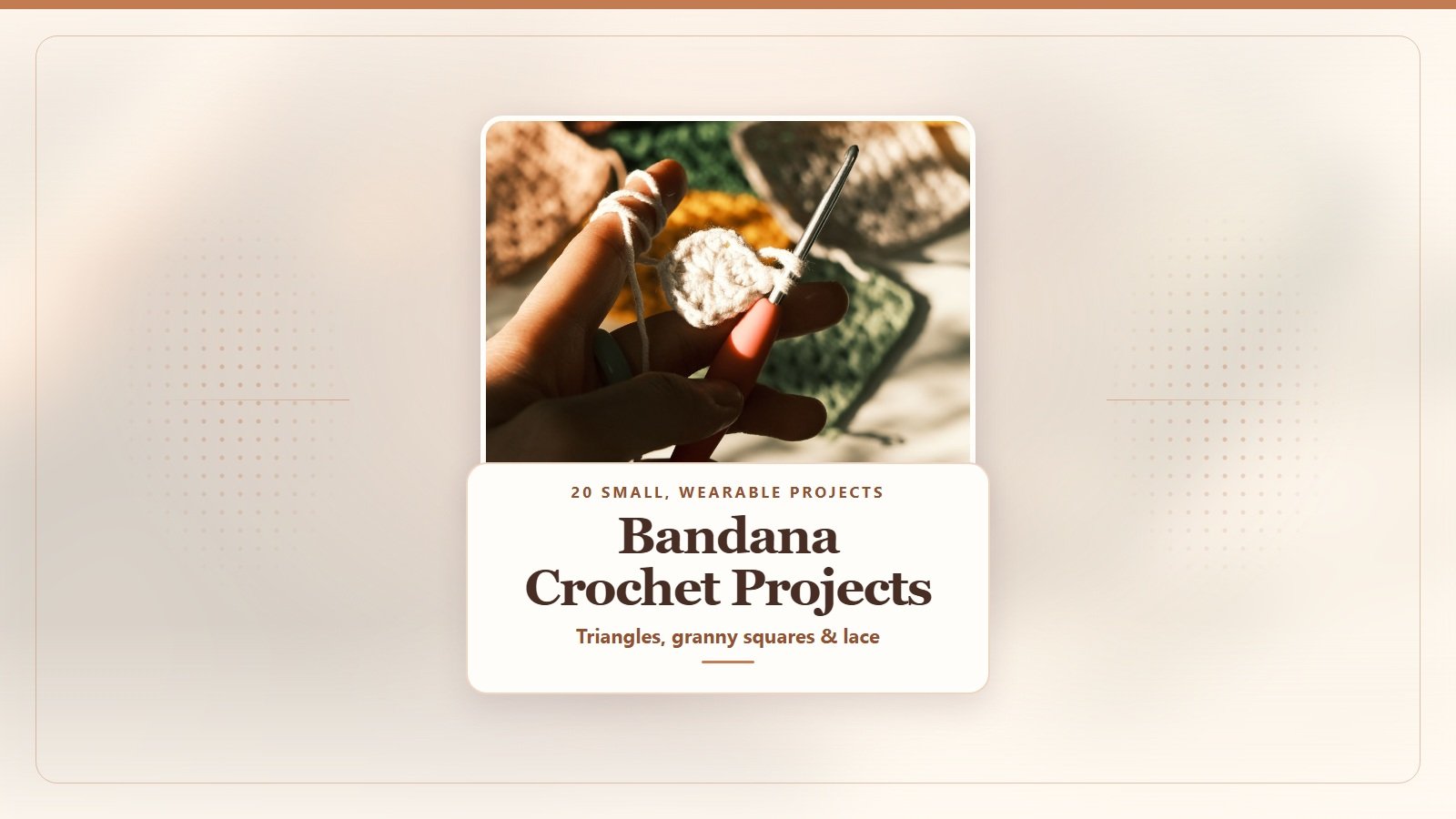
20 Charming Bandana Crochet Projects: Quick and Easy
Choose a small hair scarf, a textured triangle, or a colorful kerchief based on the yarn and time you have.
The quickest way to pick a bandana crochet project is to decide how you plan to wear it. A small triangle stays out of the way in your hair, a wider kerchief covers more, and a soft neck tie sits comfortably if its edge has enough drape.
These quick and easy crochet bandana ideas include simple repeats, granny-square assemblies, lace, and two small pet projects. The most straightforward choices are listed first. Some later styles take more attention to joins, open stitches, or finishing.

Key takeaways
- Choose a simple triangle or granny rows when you want to finish the fabric in one piece.
- Small motifs suit scraps, but the joins and yarn ends add finishing time.
- Check tie length before fastening off. It can be easier to adjust the tie than to make the triangle wider.
- Openwork shows better after blocking. Follow the yarn’s care instructions and measure after it dries.
Before you start
Pick the right yarn for the job Cotton gives definition to lace and picots. A softer blend can make a neck kerchief feel less stiff. A smooth, light yarn is easiest for learning a new stitch.
Decide how much coverage you want Measure across the line where you tie the headscarf, then compare the triangle’s depth with a scarf you already wear.
Leave time to finish Plan for two ties, end weaving, and a short blocking session. For motif projects, lay out the pieces first and check that the edge looks even.
US and UK terms Check the instructions for each source. A US single crochet is a UK double crochet.
Crochet bandana styles at a glance
Start with the shape you want to wear. The close-ups show what changes when you switch from a single triangle to joined motifs, dense texture, or open lace.
| Close-up | What to look for |
|---|---|
 |
One-piece granny triangle
The spaces between groups make it easier to see where the next cluster goes. Compare the width and ties before binding off. Pattern video · Watch on YouTube · HayHay Crochet Autumn Breeze Granny Triangle · Easy Cotton Triangle · Easy Cotton Granny Bandana · Classic Double Crochet Bandana · Granny Triangle Bandana |
 |
Soft drape
Folding a crocheted piece reveals where the fabric bends easily. Swatch the suggested yarn when you want a kerchief to lie close to the hairline. Stock drape reference · Photo · Pexels Free Head Kerchief · Easy Drape Bandana · Lazy Summer Kerchief |
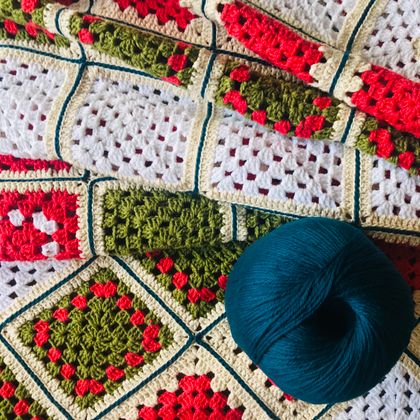 |
Joined granny squares
When a bandana uses several squares, one motif’s width affects the complete top edge. Choose a repeatable border color for cleaner joins. Stock technique reference · Photo · Pexels |
 |
Solid and raised texture
The photo in Nicki’s tutorial shows the compact look of linked crochet. Bobbles add more raised detail in the separate kerchief entry. Pattern video · Watch on YouTube · Nicki’s Homemade Crafts |
 |
Shells and openwork
Look at the fan shapes and spaces in the Beautiful Shells sample. Lace uses different repeats, so use the matching pattern for the stitch count. Pattern video · Watch on YouTube · The Snugglery Beautiful Shells Bandana · Lacy Crochet Kerchief · Cottagecore Bandana · Marietta Lacy Hair Kerchief · Breezy Boho Bandana |
 |
Narrow long headscarf
The finished Winding Road Crochet example shows the longer silhouette and how it sits when tied. Pattern video · Watch on YouTube · Winding Road Crochet |
 |
A small triangle for a pet
Compare the depth of the triangle with the width across the neck. This video illustrates one option for fit, alongside the two separate designs below. Related pet-bandana video · Watch on YouTube · Yarn Stash with Crystal | Marching North |
The easiest triangles and headscarves
01Easy Cotton Triangle
This simple headscarf is a useful starting point when you want to learn one shaping method and try on the result as you work. A light solid shade makes the edges easy to count.
Maker’s tip Measure along the tie edge and keep notes on the row where it fits. You can repeat the fit in another color later.
02Autumn Breeze Granny Triangle
Working a triangle in clusters keeps the fabric open and gives you obvious spaces for the next row. Warm color makes this version feel more autumnal than a white summer kerchief.
Maker’s tip Mark the center chain space first and count complete groups at row ends. Make the ties the same length before fastening off.
03Easy Cotton Granny Bandana
The granny-stitch fabric works up in rows, so the color and depth are easy to judge before adding ties. It is a practical choice when you have one cotton skein on hand.
Maker’s tip Use the four-cluster gauge when substituting. Save enough of the skein for both ties and the finishing edge.
04Free Head Kerchief
The larger hook gives the cotton more room to move. Pick it when you want a lightweight scarf that settles easily over the hair.
Maker’s tip Try the bandana on while you can still adjust the ties. Cotton and acrylic can produce visibly different drape with the same hook.
05Classic Double Crochet Bandana
A simple stitch pattern lets a neutral shade or a softly colored yarn carry the look. The top edge is a useful reference point when you adjust the fit.
Maker’s tip Lay the triangle flat after a few rows and make sure the sides angle evenly. Keep the same tension in the ties.
06Easy Drape Bandana
This design has a soft silhouette and keeps the emphasis on how the fabric falls. You can leave the embellishment off and still get a distinct shape.
Maker’s tip Check the fabric around the knot before adding extras. Swatch a substitute if it is less flexible than the original yarn.
Granny motifs and playful texture
07Joined Granny-Square Headscarf
Squares break up the work into short sessions. A common last-round color gives you room to vary the centers without making the kerchief look busy.
Maker’s tip Use the sample triangle size as a reference. Lay out the full and partial motifs before joining so the outer edge remains even.
08Granny Triangle Bandana
One whole triangle gives you granny texture without separate square seams. It is an especially clear first project if you learn by watching the hook enter each space.

Maker’s tip Work the first few rows with the video, then use the written count to recognize your repeat. Check depth before finishing the ties.
09Cool Granny Square Bandana
This granny-square kerchief uses small repeats to make a clear graphic pattern. Plan a repeating palette before you start if you want the colors to alternate in a deliberate way.
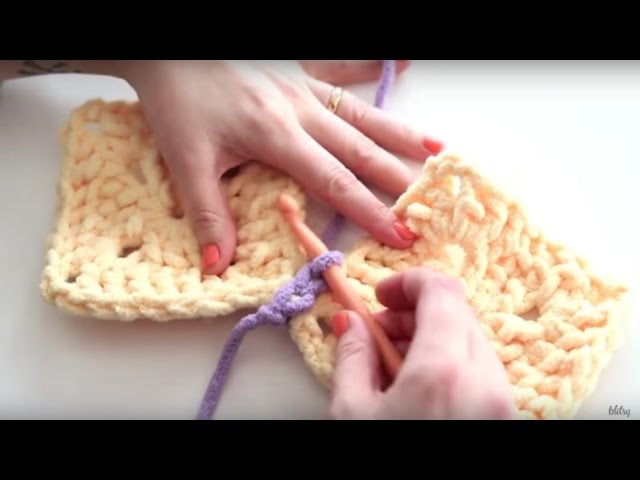
Maker’s tip Make one test motif and check it after blocking. Pick a joining color that can show slightly without interrupting the design.
10Bobble Kerchief
The raised stitches are the focus of this kerchief. A low-contrast or single-color yarn gives the bobbles room to stand out.
Maker’s tip Keep the pulled-up loops even and check which side the bobble faces. Put lighter tension into the ties if the body feels firm.
11Linked Crochet Bandana
Linked stitches bridge some of the gaps between taller stitches. Pick this when you want a more solid bandana fabric and a chance to learn a technique.

Maker’s tip Use a light training yarn for the first repeat so the linking loops are visible. Follow the source’s setup before shaping the triangle.
12Beautiful Shells Bandana
Shells give the surface a repeating fan shape and leave the scarf visually light. They make a solid color feel more detailed without needing joins.
Maker’s tip Check where each shell starts and ends as the width changes. Block gently to open the fans before judging the final depth.
Airy lace and more stitch practice

13Lacy Crochet Kerchief
An open stitch pattern gives a classic summer headscarf more drape. It works well in a quiet color if you want the shape of the lace to do most of the work.
Maker’s tip Keep a marker at the first repeat. Work a few rows with your chosen yarn and check how large the openings become after blocking.
14Lazy Summer Kerchief
This kerchief is an easy style to wear at the hairline. The reference gauge gives you a place to start when substituting yarn.
Maker’s tip Measure the stretch in the head edge as well as the relaxed width. Keep tension even when moving between open and solid sections.
15Cottagecore Bandana
A quiet palette and a decorative finish give this bandana a vintage feel. It is a good choice if you want a small accessory with a little more detail around the edge.

Maker’s tip Use a yarn that shows the border clearly. Try the main piece for fit before you add the final edging and ties.
16Marietta Lacy Hair Kerchief
The fine webbed lace gives this kerchief an open surface and a softer finish. Use it as a small project to practice spotting repeat boundaries.
Maker’s tip Follow the turning instructions closely. Measure an entire repeat instead of stretching the sample to count individual openings.
17Long Crochet Head Scarf
This more elongated head scarf is useful if you prefer longer ends and a narrow fit. The designer offers two lengths, so you can plan a specific way of tying it.

Maker’s tip Measure the scarf in the position you’ll wear it. Keep the ends symmetrical when switching to the finishing rows.
18Breezy Boho Bandana
Fine yarn gives the fabric a more delicate scale. The source also gives a separate hook and yarn choice for a larger hip-scarf version.
Maker’s tip Follow the supply list for the intended size. If the fabric feels overly loose, compare a blocked swatch before changing the hook.
Small bandanas for pets
19Everyday Dog Bandana
A solid-color dog bandana is a practical first pet accessory. Choose a color with enough contrast that you can identify stitches near the shaping.
Maker’s tip Measure the pet before you finish the fastening. Remove the neckwear after supervised wear.
20Tunisian Crochet Dog Bandana
Tunisian stitches give this small kerchief a more paneled look. It is a manageable place to practice holding several loops on a hook and then working them off.
Maker’s tip Confirm that all loops fit on the extension before reaching the widest part. Finish and secure the fastening as instructed before trying it on.
Frequently asked questions
What is the quickest crochet bandana shape?
A plain triangle with a repeat you can memorize is usually quick to work. A strip or shallow triangle takes less fabric than a deeper headscarf.
Can I crochet a bandana with one skein?
Many small designs can use one skein, but compare the pattern’s yardage with your label. Save enough yarn for ties and the edge before making the triangle deeper.
How can I keep the top edge straight?
Mark the first and last stitches or the turning chain as the pattern specifies. Lay the piece flat periodically and measure both sloping sides.
Do I have to use a Tunisian hook?
Follow the designer’s guidance. For some narrow pieces a straight hook may hold the stitches, while wider sections may need a longer hook or a cord.
How do I choose a beginner-friendly project from this list?
Start with the Sarah Maker, Hayhay Crochet, or Marching North design if you prefer a repeat and a clear path to the ties. Take on joined squares once you feel comfortable matching motif size.
Final thoughts
A bandana is small enough to learn one new technique without committing to a big project. If the shape already fits the way you wear scarves, a different stitch or a contrasting border can make the next one feel completely different.